Leave Your Message
0%

Hey, you know, in the world of heart procedures these days, the Interventional Guiding Catheter is really playing a crucial role. I was reading what Dr. Robert Smith from CardioInnovate had to say—he mentioned that good design tweaks can seriously boost both the precision of the procedures and how patients fare afterward. That pretty much sums up how much things are evolving in this space.

Lately, there have been some pretty exciting improvements with these catheters. For example, new materials are making them more flexible and tougher at the same time. Plus, better imaging tech means real-time feedback has become more reliable, which is a game changer. It’s clear that the focus is shifting toward more personalized treatments tailored to each patient’s needs. But honestly, it’s not all smooth sailing—there are still some tricky parts, especially when it comes to navigating complex blood vessel structures.

Understanding where these devices fall short is super important if we want to get better. As the field moves forward, feedback from doctors and specialists like you and me really makes a difference. The whole journey to improve the Interventional Guiding Catheter is definitely ongoing. Every new idea or tweak gets us closer to better patient outcomes. And honestly, looking back at what didn’t work in the past can actually teach us a lot about what will work in the future.

2026 Top Interventional Guiding Catheter Trends and Innovations?

Overview of Interventional Guiding Catheters in 2026

2026 Top Interventional Guiding Catheter Trends and Innovations?

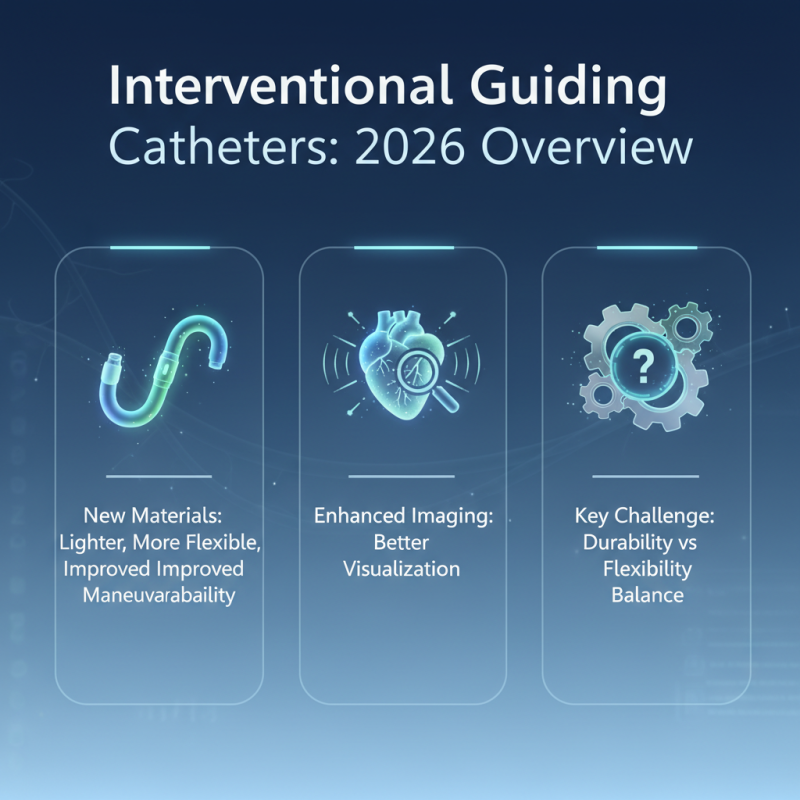
Interventional guiding catheters play a crucial role in modern medical procedures. By 2026, their design and function have continued to evolve significantly. New materials are lighter and more flexible. This improves maneuverability within the vascular system. Enhanced imaging capabilities allow for better visualization during interventions. However, challenges remain. The balance between durability and flexibility is often hard to achieve.

Recent developments include customizable catheter designs, tailoring to specific patient needs. Such personalization can enhance success rates in complex procedures. Yet, this customization raises questions about standardization in practice. Training for medical staff also needs to keep pace with these innovations. Incorporating new technologies can be daunting. Adapting to different guiding catheters is essential but requires time and effort.

The growing trend toward less invasive procedures benefits from these advancements. Improved catheters reduce recovery time for patients. However, not all innovations work seamlessly in real-world scenarios. Some devices may face technical limitations that hinder their effectiveness. Continuous feedback from end-users is needed to address these flaws. Moreover, ethics and safety should remain a priority as innovation drives the field forward.

Key Innovations Driving the Evolution of Guiding Catheters

The landscape of interventional guiding catheters is changing rapidly. Innovations in materials and design are enhancing their performance. Lightweight composites are becoming the norm, allowing for improved maneuverability. These materials can also offer better flexibility, which is crucial in complex procedures.

Another trend is the integration of advanced imaging technologies into guiding catheters. Real-time imaging aids physicians in navigating through intricate vascular structures. This integration, however, raises questions about the balance between technological complexity and user-friendliness. Not all surgeons may be prepared for such sophisticated tools.

Miniaturization is another critical development. Smaller catheters can lead to less trauma and quicker recovery for patients. However, these devices can also present challenges. Operators must adapt to a reduced tactile feedback. There's a potential risk in precision. As innovations continue to evolve, monitoring their impact on clinical outcomes is essential.

Trends in Materials and Design for Enhanced Performance

The world of interventional guiding catheters is evolving rapidly. Innovations in materials and design are leading to improved performance in procedures. One major trend is the use of advanced polymers. These materials enhance flexibility and reduce friction, making navigation easier. This change is crucial in Interventional Urology, where precision is key.

Another innovation is the development of ergonomic designs. These catheters are easier to handle, reducing fatigue for surgeons. Features like textured grips are becoming popular. However, not all new designs are perfect. Some may not meet all healthcare needs.

Tips: When choosing a catheter, consider the procedure type. Think about material compatibility. Evaluate how it feels in hand. The right choice may vary from case to case, and flexibility in approach is essential.

Advancements in Delivery Systems and Navigation Technologies

Recent advancements in delivery systems are shaping the future of interventional guiding catheters. These innovations focus on enhancing precision and effectiveness. New materials are being used to create guidewires that are both flexible and strong. This improvement helps doctors navigate through complex vascular systems more efficiently. However, the balance between flexibility and stability remains a challenge.

Navigation technologies are also evolving rapidly. Physicians now utilize advanced imaging techniques that offer real-time feedback during procedures. This allows for greater accuracy in placing Interventional Guidewires. Despite these positive strides, there are still obstacles to overcome. For instance, the need for more intuitive interfaces in navigation systems is apparent. Some tools can be confusing, risking potential delays during critical moments.

Incorporating artificial intelligence into these technologies is another exciting trend. AI can help predict the best pathways for guidewire navigation. It also assists in decision-making during procedures. Yet, reliance on such technology raises questions about human oversight. Ensuring that medical professionals remain in control is vital. Continuous feedback is necessary to refine these innovations for better patient outcomes.

Integration of Imaging Techniques in Interventional Procedures

The integration of imaging techniques in interventional procedures is transforming healthcare. Interventional Radiology now combines advanced imaging with minimally invasive techniques. This synergy enhances precision during complex procedures, offering better patient outcomes.

Emerging trends showcase the use of real-time imaging. Doctors can visualize structures live while guiding catheters. This method allows for immediate adjustments, improving safety and effectiveness. The use of 3D imaging is growing, offering more detailed anatomical views, yet challenges remain. Maintaining clarity during rapid movements can be tough.

Another focus is on the training aspect. As technology evolves, practitioners need to adapt. With advanced systems, learning curves can be steep. Finding balance between traditional skills and new technologies demands reflection. This ensures that patient care remains the priority in Interventional Radiology.

Impact of Robotics and Automation on Guiding Catheter Use

2026 Top Interventional Guiding Catheter Trends and Innovations?

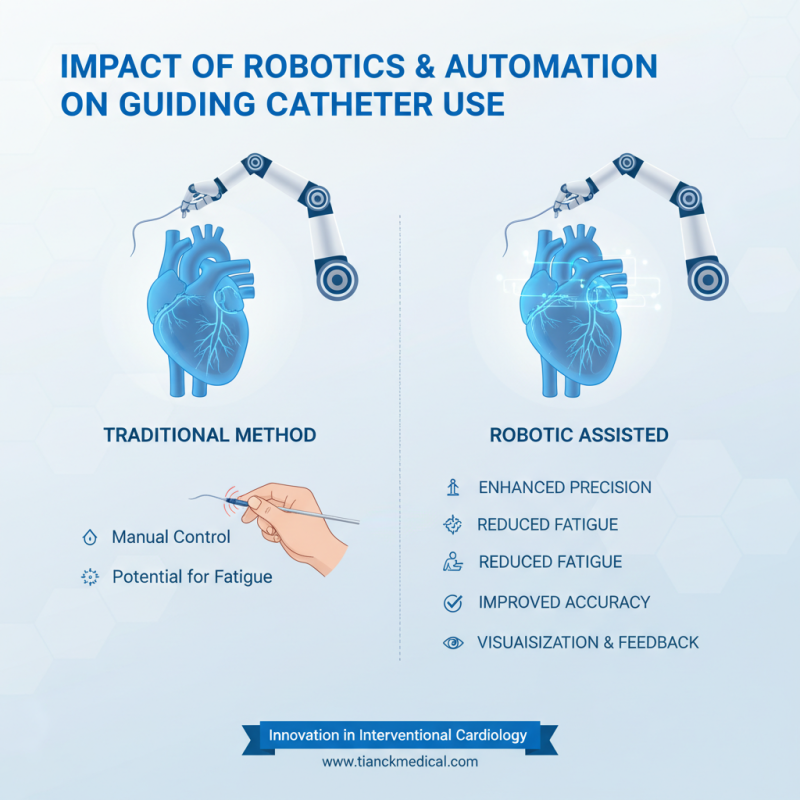
Robotics and automation are changing the landscape of Interventional Cardiology. These technologies aim to enhance precision during procedures. For instance, robotic systems can allow surgeons to manipulate guiding catheters with greater control. This could reduce fatigue and improve accuracy. Enhanced visualization and real-time feedback are also key advantages.

However, there are challenges to embrace. Not all facilities can afford high-end robotic systems. Additionally, the learning curve for staff can be steep. Some may struggle to adapt, which can impede the full integration of these innovations.

As we progress towards 2026, analyzing the long-term impact on patient outcomes will be crucial. Will these advancements lead to fewer complications during procedures? Or will reliance on technology introduce new risks? Continuous evaluation will guide future practices in interventional cardiology.

Future Directions and Research Opportunities in Catheter Development

As we look towards the future of interventional guiding catheters, it is crucial to focus on innovation and research opportunities. The development of catheters that are not only effective but also safer for patients is essential. Flexible materials might improve maneuverability. Enhanced imaging techniques could allow real-time feedback during procedures. Such advancements could significantly reduce complications.

One area of exploration is biocompatibility. Researchers aim to create catheters that minimize tissue response. This can lead to better patient outcomes. Studies should examine materials that resist thrombosis. There is also potential in multi-functional catheters, which can perform diagnostics while guiding interventions. Each new idea brings a challenge, requiring testing and validation.

Tips: Always consider the patient's perspective. User-friendly designs can improve the adoption of new technologies. Collaboration among engineers and clinicians is vital. Sharing findings can accelerate progress. Every innovation must prioritize patient safety and efficacy. This path is filled with unknowns, but each step holds promise.

2026 Top Interventional Guiding Catheter Trends and Innovations

Trend/Innovation Description Impact on Procedure Future Research Opportunities
Biodegradable Materials Use of materials that dissolve over time to reduce long-term complications. Enhances patient safety by reducing risk of chronic foreign body reactions. Developing new biodegradable polymers with optimal mechanical properties.
Smart Catheters Integration of sensors to provide real-time feedback during procedures. Improves procedure precision and patient outcomes through better navigation. Research on miniaturization of sensors and enhanced power sources.
Multi-Lumen Catheters Designs that allow for multiple access points and simultaneous procedures. Increases efficiency and reduces time spent in intervention. Exploration of configurations for different therapeutic approaches.
Enhanced Flexibility Improved designs for better navigation through complex anatomy. Reduces the risk of vascular injury and enhances patient comfort. Investigation into new materials and structural designs.
3D Printing Customization of catheters based on patient-specific anatomy. Tailors the intervention to individual patient needs, improving outcomes. Development of regulatory frameworks for 3D printed medical devices.

Understanding Long Term Hemodialysis Catheters: Key Features, Benefits, and Best Practices for Use

Long term hemoDialysis Catheters serve as a critical tool for managing patients with end-stage renal disease (ESRD), particularly for those requiring prolonged dialysis treatment. These specialized catheters are designed to provide reliable vascular access over extended periods, facilitating the efficient exchange of blood during dialysis sessions. Unlike their temporary counterparts, long term catheters are typically tunneled under the skin, diminishing the risk of infection—one of the significant concerns in dialysis treatment. According to the National Kidney Foundation, approximately 37 million adults in the United States are estimated to have chronic kidney disease, and many may ultimately require hemodialysis, underscoring the demand for effective and safe vascular access solutions.

Key features of long term hemodialysis catheters include their flexible design, which allows for easier insertion into major veins such as the jugular, subclavian, or femoral vein. Data from recent studies indicate that the use of tunneled catheters can reduce the incidence of catheter-related bloodstream infections by as much as 50% compared to non-tunneled catheters, which is essential for improving patient outcomes. Furthermore, maintaining a sterile environment during catheter insertion and care is paramount, as reported by the Centers for Disease Control and Prevention, which advocates for strict adherence to best practices in catheter management.

In addition to infection reduction, the benefits of long term hemodialysis catheters extend to improved patient comfort and convenience. Patients can experience less disruption to their daily lives, as these catheters promote continued treatment without the frequent need for replacement, unlike temporary catheters that often require frequent changes. Overall, long term hemodialysis catheters represent a vital component in the effective and safe management of patients undergoing chronic dialysis, supporting their health and quality of life.

FAQS

: What materials are enhancing catheter performance?

: Advanced polymers are enhancing flexibility and reducing friction. This makes navigation easier during procedures.

How do ergonomic designs benefit surgeons?

Ergonomic designs reduce fatigue and improve handling. Textured grips are becoming popular for better ease of use.

What should I consider when choosing a catheter?

Consider the procedure type and material compatibility. Evaluate how the catheter feels in hand.

What advancements are being made in delivery systems?

New materials are creating guidewires that are both flexible and strong. This aids navigation in complex systems.

What are the challenges in navigation technologies?

Balancing flexibility and stability is a challenge. Some navigation interfaces can be confusing for users.

How is artificial intelligence playing a role?

AI helps predict pathways for guidewire navigation. It supports decision-making during procedures.

Are there downsides to relying on AI in procedures?

Yes, reliance on AI may reduce human oversight. Medical professionals must remain in control for patient safety.

Why is continuous feedback important for new technologies?

Continuous feedback refines innovations and improves patient outcomes. It is vital to adapt to evolving healthcare needs.

Conclusion

The article "2026 Top Interventional Guiding Catheter Trends and Innovations" explores the evolution and future of Interventional Guiding Catheters. It provides an overview of current advancements, focusing on key innovations that enhance their performance. These innovations include significant improvements in materials and design, allowing for greater flexibility and durability. Trends in delivery systems and navigation technologies are also highlighted, showcasing how integration with advanced imaging techniques optimizes interventional procedures.

Furthermore, the article discusses the impact of robotics and automation on the application of Interventional Guiding Catheters, emphasizing the potential for improved precision and efficiency in medical interventions. Finally, it identifies future directions and research opportunities in catheter development, underlining the ongoing evolution of this critical medical tool and its role in advancing patient care.
Liam

Liam

Liam is a dedicated professional marketing specialist at Tianck Medical CO., Ltd., where he passionately works to improve patient outcomes and advance healthcare. With a deep understanding of the medical industry, Liam plays a crucial role in promoting the company's precision-engineered products,......
Previous Exploring Unique Options for Micro Guide Wire in Global Markets